
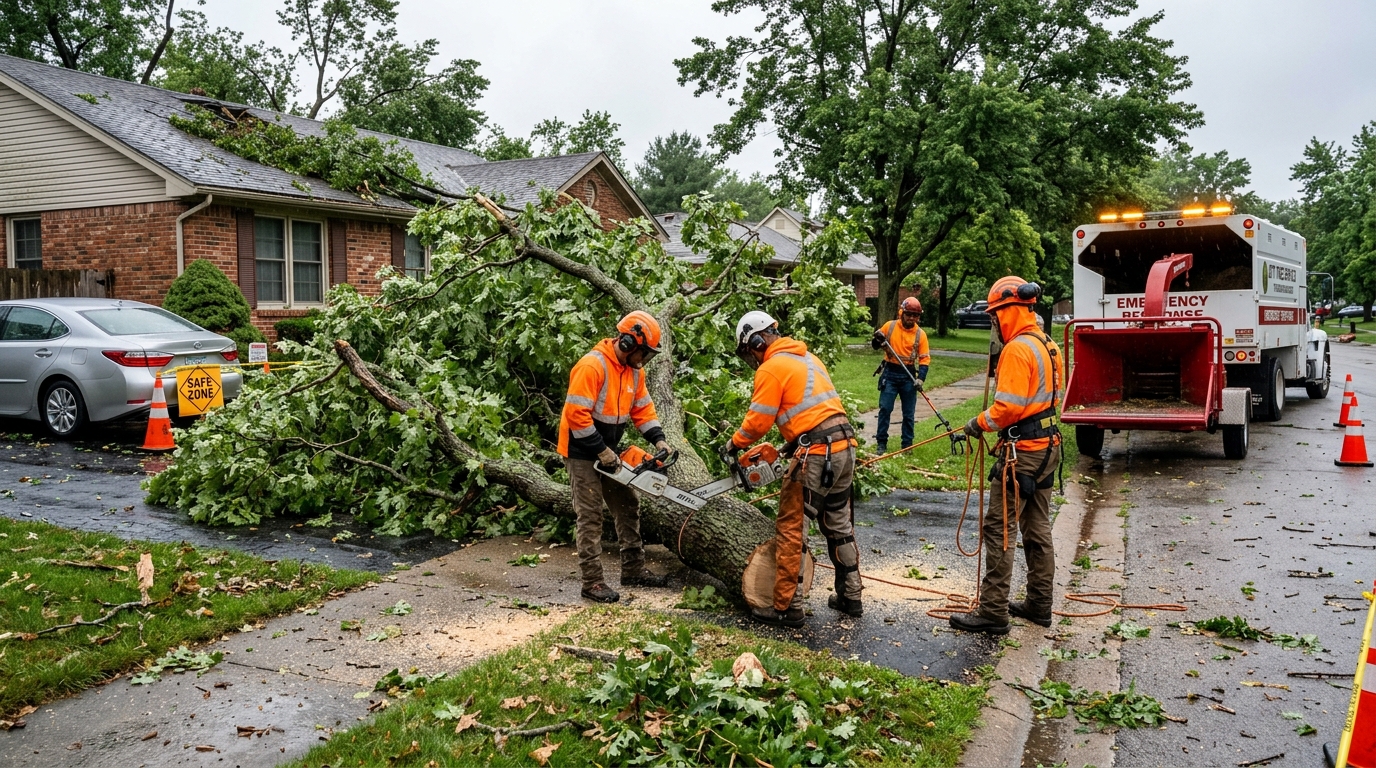
Severe weather events—including thunderstorms, tornadoes, high wind gusts, and winter ice storms—cause hundreds of thousands of trees to topple across the United States each year. When a massive branch crashes onto your roof or a tree blocks your driveway, immediate, level-headed action is required to ensure family safety and protect your home insurance claim.
Step 1: Ensure Immediate Safety & Evacuate If Necessary
Stay Clear of Downed Power Lines: Never approach a fallen tree that is in contact with electrical wires. Electricity can travel through wet wood and ground soil. Treat all lines as live and call 911 and your electric utility provider immediately.
Inspect Structural Integrity: If a heavy trunk has pierced the roof or compromised the ceiling, evacuate the house until a structural engineer or fire department inspects the property.
Step 2: Document Everything Before Moving Debris
Before tree removal crews begin cutting and hauling, take extensive high-resolution photos and videos from multiple safe angles:
Wide shots of the tree and structural impact points.
Close-ups of roof punctures, shattered gutters, broken windows, and damaged fences.
Time-stamped documentation for your insurance claims adjuster.
Step 3: Contact a 24/7 Emergency Tree Service Crew
Call a licensed emergency tree removal contractor equipped with:
Heavy-duty bucket trucks and crane rigging.
Emergency tarping services to prevent rainwater intrusion through roof punctures.
Experience in preparing itemized insurance claim invoices.
| Storm Severity | Equipment Dispatched | Typical Emergency Cost |
|---|---|---|
| Downed Yard Tree (No Structure) | Chainsaws, Chippers, Bobcat | $400 – $900 |
| Tree on Driveway / Vehicle | Heavy Rigging, Flatbeds | $800 – $1,800 |
| Tree Crushed Roof / Hazardous Hang | 60-Ton Crane, Emergency Tarping | $2,000 – $6,000+ |
Will Homeowners Insurance Cover the Removal?
In most cases, standard HO-3 homeowners insurance policies cover tree removal and property repair if the tree fell due to a covered peril (such as windstorms, lightning, or ice), up to policy limits (usually $500 to $1,000 for tree removal plus full structural repair costs minus your deductible).
If the tree was visibly dead or rotted before the storm and the homeowner neglected maintenance, insurance adjusters may dispute the claim under "lack of maintenance." Always maintain inspection records from certified arborists.
Need a Verified Tree Removal Pro in Your City?
Avoid contract delays and unexpected pricing. Search our nationwide directory of licensed, highly-rated tree cutting and stump specialists with verified customer reviews.
Find Contractors Near You →